Bitcoin IRA Taxes: Roth, Traditional and Self-Directed IRA Rules for 2026
A retirement account can hold Bitcoin exposure through exchange-traded trust shares or, with a suitable self-directed custodian, direct digital assets. The account wrapper changes when tax is recognized, but it does not erase IRA contribution, distribution, valuation and prohibited-transaction rules. A single self-dealing transaction can cause an IRA to lose its status, so custody and account ownership matter as much as the investment.
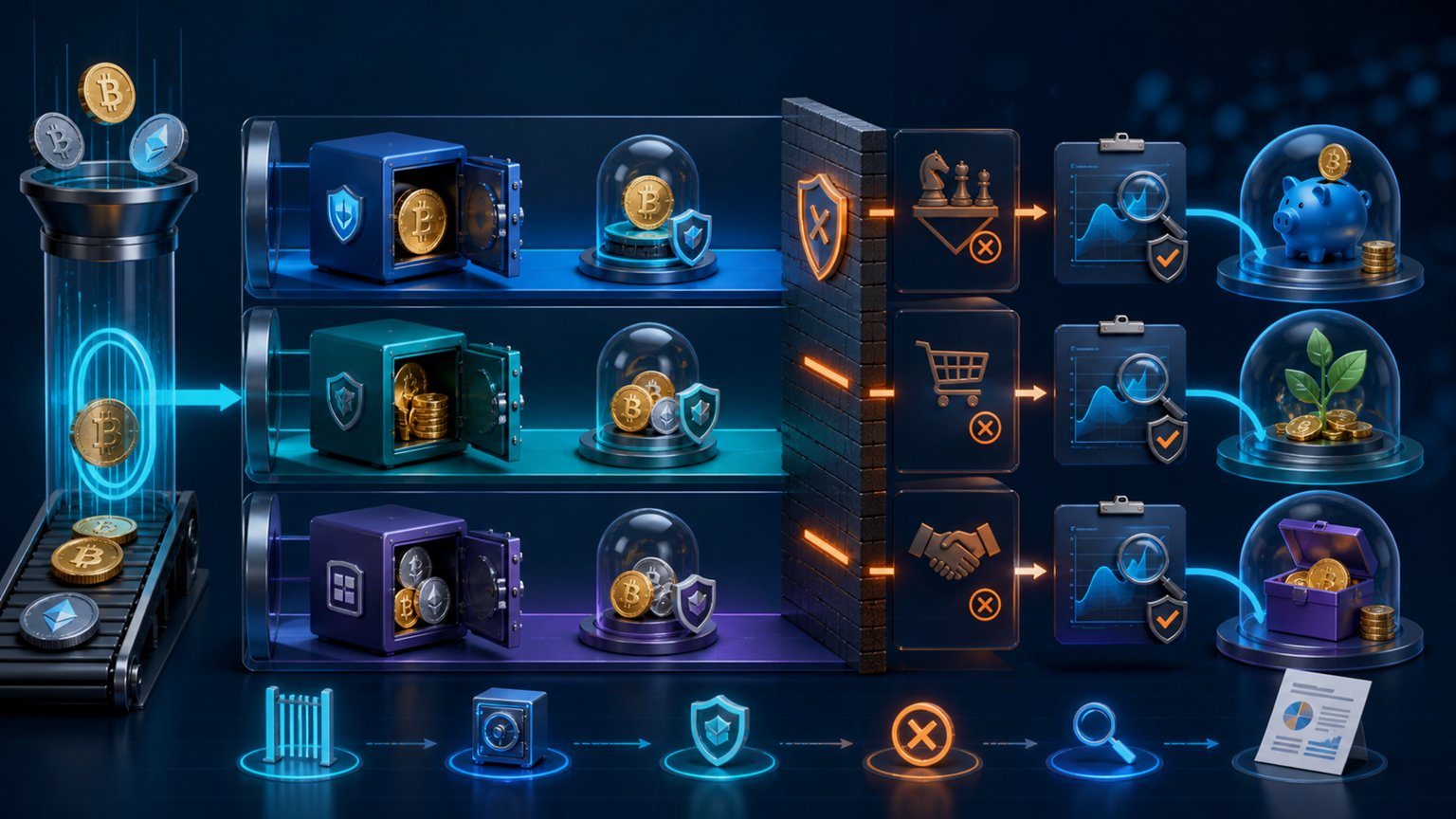
Short answer: tax-advantaged does not mean rule-free
Prepare Your Crypto Tax Workpapers
Import your transactions, review the results and generate detailed tax workpapers without building the entire calculation manually in spreadsheets.
Start for free →Buying and selling an investment inside a valid IRA generally does not create current Form 8949 capital-gain reporting for the IRA owner. A traditional IRA generally defers tax until distributions, while a Roth IRA can produce tax-free qualified distributions. Neither result is unconditional:
- A traditional IRA contribution is not always deductible.
- A Roth contribution is limited by compensation and modified adjusted gross income.
- Roth earnings are tax-free only when distribution rules are satisfied.
- A distribution before age 59½ can be taxable and may face a 10% additional tax unless an exception applies.
- Self-directed IRA assets cannot be used personally or transacted with disqualified persons.
- Debt-financed or business income can create unrelated business income tax inside an IRA.
Two ways to hold Bitcoin exposure in a retirement account
Bitcoin exchange-traded product in a brokerage IRA
A brokerage IRA may allow shares of a spot Bitcoin exchange-traded trust such as IBIT or FBTC. The IRA owns the shares through its custodian; the account owner does not directly control the trust’s Bitcoin. This can fit a standard brokerage workflow, subject to the broker’s product menu.
Major US spot Bitcoin products describe intended grantor-trust tax treatment. In a taxable account, internal Bitcoin dispositions for trust expenses can create proportional gain, loss and basis adjustments. Inside a tax-exempt IRA, ordinary investment trading generally does not create current owner-level capital-gain tax, although unusual business or debt-financed income still requires review. See the Bitcoin ETF tax guide for the trust mechanics.
Direct Bitcoin in a self-directed IRA
A self-directed IRA can use an eligible trustee or custodian that supports digital assets. The IRA—not the individual—must own the account, cash and Bitcoin. The investor directs investments within the account agreement, but self-direction does not remove the custodian or prohibited-transaction rules.
Sending IRA Bitcoin to a personal hardware wallet, using it as collateral for a personal loan, paying a personal bill or trading with the owner’s related business can jeopardize the account. A checkbook-control LLC adds legal and accounting complexity; it is not an IRS safe harbor.
Traditional IRA versus Roth IRA for Bitcoin
| Feature | Traditional IRA | Roth IRA |
|---|---|---|
| Regular contribution | May be deductible, partially deductible or nondeductible | Not deductible |
| Income limit | Contribution possible with compensation, but deduction can phase out | Direct contribution phases out by MAGI and filing status |
| Investment trading inside account | Generally tax-deferred | Generally not currently taxed |
| Distribution | Taxable to the extent it represents untaxed contributions and earnings | Qualified distributions are tax-free; nonqualified distributions need ordering analysis |
| Required minimum distributions | Generally apply to the original owner beginning under the age rules | None for the original Roth IRA owner during life |
Traditional contributions are not automatically deductible. Workplace-plan participation, filing status and modified adjusted gross income can reduce or eliminate the deduction. A nondeductible contribution creates basis that must be tracked on Form 8606; otherwise a later distribution can be overstated as fully taxable.
A Roth IRA uses after-tax contributions. A qualified distribution generally requires that the five-taxable-year period beginning with the first Roth IRA contribution has been met and that the distribution occurs after age 59½, after death, because of disability or for the qualified first-home exception within its statutory limit. Nonqualified distributions use ordering rules and may expose earnings to income tax and the additional early-distribution tax.
2026 IRA and workplace-plan limits
For 2026, IRS Notice 2025-67 increased the combined regular contribution limit across all traditional and Roth IRAs to $7,500. An individual age 50 or older by year-end can add a $1,100 catch-up contribution, for a combined $8,600 maximum, subject in every case to eligible compensation and the other rules.
Direct Roth IRA contributions phase out in 2026 at modified AGI of:
- $153,000 to $168,000 for single and head-of-household filers;
- $242,000 to $252,000 for married filing jointly and qualifying surviving spouses;
- $0 to $10,000 for many married-filing-separately taxpayers covered by that rule.
The 2026 employee elective-deferral limit for most 401(k), 403(b) and governmental 457 plans is $24,500. The general age-50 catch-up is $8,000, while eligible participants who turn 60 through 63 in 2026 can have a higher $11,250 catch-up if the plan permits it. The overall defined-contribution-plan limit increased to $72,000, but that is not simply an employee contribution allowance; employer contributions, compensation and plan design determine the available amount.
An employer plan is not required to offer Bitcoin or a Bitcoin fund. A solo 401(k) must be established and operated under its plan document; calling a personal trading account a solo plan does not create retirement treatment.
How to fund a Bitcoin IRA without creating a problem
Regular IRA contributions generally must be money. IRS Publication 590-A says property cannot be contributed, except through qualifying rollover mechanics. An investor generally cannot move personally owned Bitcoin into a new IRA and label its market value a regular contribution. A common direct-asset workflow is:
- Open the correctly titled IRA with an eligible trustee or custodian.
- Contribute cash within the annual limit or arrange a valid trustee-to-trustee transfer or rollover.
- Have the IRA, through its approved account, acquire the Bitcoin.
- Keep the asset and all proceeds titled to and controlled for the IRA.
A trustee-to-trustee transfer is generally not a distribution and is not subject to the one-rollover-per-12-month rule. A 60-day rollover places funds temporarily with the owner and has deadlines, withholding and one-rollover risks. Direct transfers are often administratively cleaner.
A Roth conversion is different from a regular contribution. Converting pre-tax traditional IRA value to a Roth generally creates ordinary income for the conversion year, though it is not limited by the regular annual contribution ceiling. Nondeductible basis and the taxpayer’s other traditional, SEP and SIMPLE IRAs affect the taxable proportion; a “backdoor Roth” is not automatically tax-free.
Self-dealing and prohibited transactions
The IRS defines prohibited transactions as improper uses of the IRA by the owner, beneficiary or another disqualified person. Family rules include a spouse, ancestors, lineal descendants and spouses of lineal descendants; fiduciaries and service providers can also be disqualified persons.
Crypto-related examples that require particular caution include:
- selling personally owned Bitcoin or an NFT to the IRA;
- buying the IRA’s Bitcoin personally;
- sending IRA assets to a personally controlled wallet for personal use;
- pledging IRA Bitcoin as collateral for the owner’s loan;
- using IRA collateral to trade for the owner or a related entity;
- paying personal exchange, mining or business costs from the IRA;
- receiving compensation personally for managing an IRA-owned entity.
The consequence can be severe. If the IRA owner or beneficiary engages in a prohibited transaction, the account generally stops being an IRA as of the first day of that tax year and is treated as distributing its assets at fair market value. Income tax and the 10% additional tax can follow. This is why “not your keys” cannot be solved by casually moving self-directed IRA assets into a personal wallet.
Staking, DeFi, borrowing and unrelated business income
Passive investment income and capital gains are often excluded from unrelated business taxable income, but the exceptions matter. Income from a regularly conducted trade or business passed through from a partnership, or income attributable to debt-financed property, can enter UBTI. An IRA with $1,000 or more of gross unrelated business income generally needs its own EIN and Form 990-T.
It is inaccurate to say that all DeFi lending automatically creates UBTI. The result depends on the legal arrangement and activity. Relevant warning signs include:
- margin, borrowing or acquisition indebtedness;
- an LP or LLC interest conducting an active business;
- leveraged yield strategies;
- protocol positions treated as partnership interests;
- operating mining or validator activity rather than holding an investment.
Ordinary unleveraged purchases and sales of investment Bitcoin do not become UBTI merely because prices rise. Before enabling margin, lending, liquidity pools, staking services or an IRA-owned LLC, obtain a classification based on the contracts and entity tax forms.
Distributions, early withdrawals and RMD liquidity
A traditional IRA distribution is generally included in income to the extent it represents deductible contributions and earnings. Before age 59½, the taxable portion may also face a 10% additional tax unless a statutory exception applies. A Roth IRA distribution requires ordering and qualification analysis; withdrawing contribution basis is not the same as receiving a qualified distribution of all earnings.
Traditional IRA owners generally begin required minimum distributions at age 73 under current rules. The custodian reports fair market value, but illiquid or volatile crypto can make a distribution difficult. The account may need enough cash or an in-kind distribution process. A distributed Bitcoin amount moves into the individual’s taxable ownership at the reportable value and starts a new outside-IRA basis; later sale is a separate taxable event.
Original Roth IRA owners do not take lifetime RMDs, but inherited IRA rules differ. Beneficiary, ten-year, annual-distribution and spousal options require a separate analysis.
How to review a self-directed crypto IRA provider
A custodian’s willingness to hold an asset is not an endorsement of its quality. The SEC and state regulators warn that self-directed IRA custodians generally do not investigate or validate the alternative investment. Review:
- trustee/custodian authorization and legal account title;
- asset custody, private-key controls and insurance scope;
- trading venue, spreads and execution method;
- opening, annual, custody, trading, asset-specific and closure fees;
- independent valuation and year-end Form 5498 process;
- distribution, beneficiary, RMD and account-transfer procedures;
- what happens in insolvency, cyberattack or loss of access;
- whether the provider supports only spot assets or also leverage and entities.
This article does not rank providers. Fees and product terms change, and a provider comparison without current custody and regulatory verification can mislead users.
Bitcoin IRA tax forms and records
| Form or record | Typical purpose |
|---|---|
| Form 5498 | Custodian reports contributions, rollover amounts and year-end fair market value |
| Form 1099-R | Reports distributions and applicable distribution code |
| Form 8606 | Tracks nondeductible traditional IRA basis and certain Roth conversion/distribution items |
| Form 5329 | Additional taxes for early distributions, excess contributions or RMD issues when applicable |
| Form 990-T | IRA filing for qualifying gross UBTI and related tax |
| Custodian ledger | Proves account ownership, trades, fees, transfers, valuation and distributions |
Ordinary trades wholly inside the IRA should not be mixed into the owner’s taxable-wallet Form 8949 report. A CoinTaxReporting US report should tag the retirement account as a separate owner and exclude internal IRA trades from personal capital-gain totals, while still preserving the audit trail. A distribution to the owner changes the asset’s tax location and must be recorded.
For assets outside the IRA, use the US Bitcoin tax guide, capital-gains guide and Form 1099-DA guide.
Frequently asked questions
Can I contribute my personally owned Bitcoin to an IRA?
Regular IRA contributions generally must be money, not property. A qualifying rollover can follow different rules, but personally owned Bitcoin cannot simply be relabeled as a regular contribution.
Is a Bitcoin Roth IRA completely tax-free?
Investment trading is generally not currently taxed, but only qualified Roth distributions are fully tax-free. Contribution eligibility, the five-year period and a qualifying distribution condition matter.
What is the 2026 IRA contribution limit?
The combined traditional and Roth IRA limit is $7,500, plus a $1,100 catch-up for someone age 50 or older, subject to eligible compensation and other limitations. Rollovers do not use this regular limit.
Can I keep self-directed IRA Bitcoin in my personal hardware wallet?
Personal possession or use can create custody and prohibited-transaction problems. The IRA and its eligible custodian must remain the owner; do not commingle IRA and personal assets.
Does every crypto DeFi transaction create UBTI?
No. UBTI depends on the actual business, partnership and debt-financing facts. Leverage and active pass-through business activity are key review points.
Do I report IRA Bitcoin sales on Form 8949?
Ordinary investment sales wholly inside a valid IRA generally are not owner-level Form 8949 transactions. Distributions, prohibited transactions and UBTI use separate rules and forms.
Can an IRA own a spot Bitcoin ETF?
A custodian may permit exchange-traded Bitcoin trust shares in an IRA. Availability, fees and account rules vary, and the product does not give the owner direct control of the underlying Bitcoin.
Official sources
- IRS Notice 2025-67: 2026 retirement-plan limits
- IRS Publication 590-A: IRA contributions, transfers and conversions
- IRS Publication 590-B: IRA distributions
- IRS: prohibited transactions and effect on an IRA
- IRS: Form 990-T instructions for IRAs with UBTI
- IRS Publication 598: unrelated business and debt-financed income
- SEC Investor.gov: self-directed IRA fraud and valuation risks
Sources reviewed September 1, 2026. This guide is educational and does not recommend a provider or investment. Self-directed custody, related-party dealings and leveraged strategies require account-specific review.
Related Resources
Generate Your Crypto Tax Report
Import your transactions, review the results and generate a detailed PDF report with a transaction-level audit trail.
Start for free →Disclaimer: This article is for general informational purposes only and does not constitute tax advice. For individual tax advice, consult a licensed tax professional.