Porez na kriptovalute u Hrvatskoj 2026: JOPPD prijava za 2025.
Za prijavu kapitalnih dobitaka ostvarenih u 2025. najvažnije je pravilno razdvojiti oporezive prodaje unutar dvije godine, neoporezive prodaje nakon dvije godine, zamjene kripto-za-kripto, primitke od rudarenja ili usluga te gubitke. Ovaj vodič povezuje važeću stopu od 12% s najnovijim primjerima Obrasca JOPPD koje je Porezna uprava objavila u siječnju i veljači 2026.
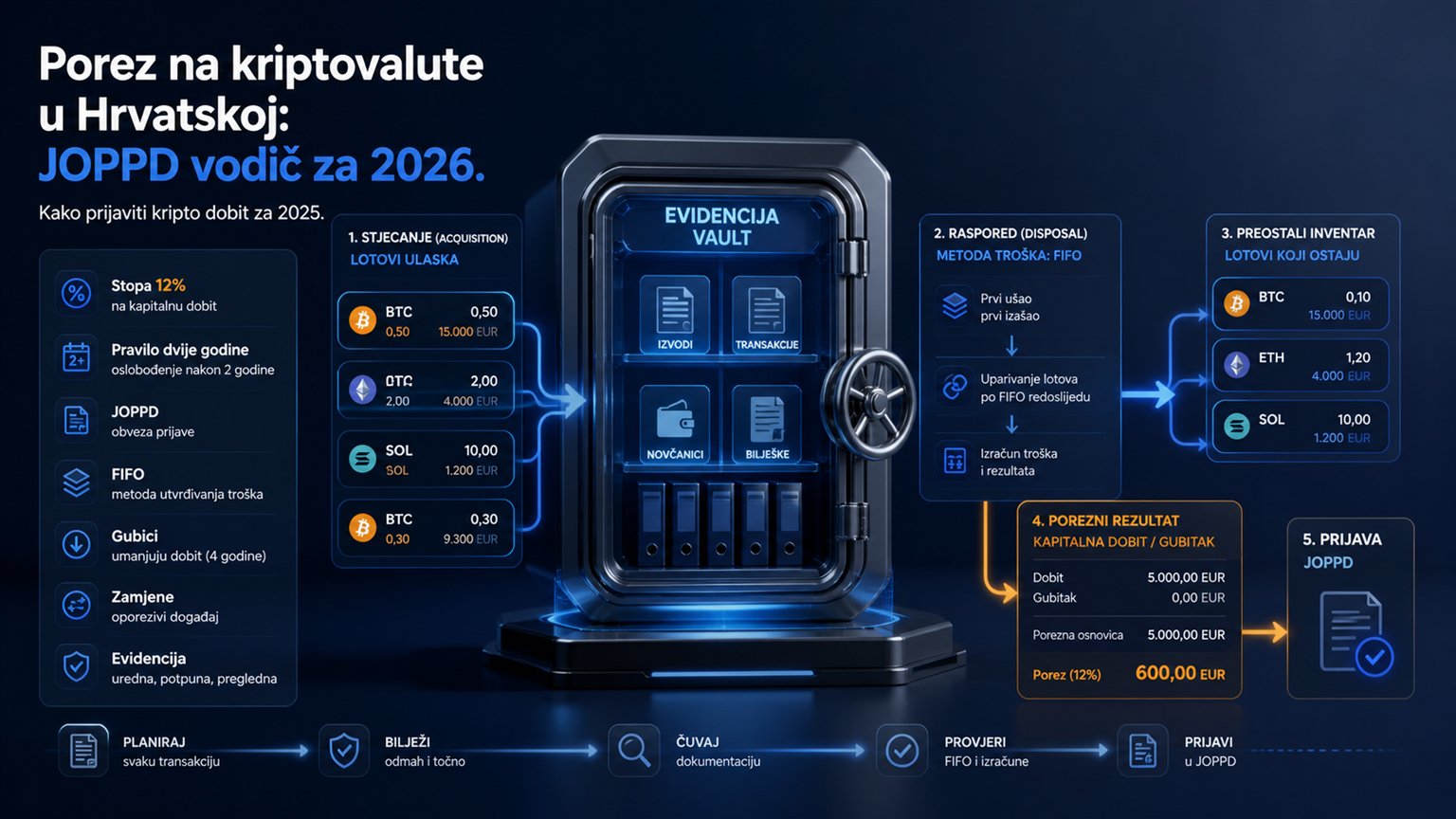
Najvažnija pravila za prijavu u 2026.
Pripremite podatke za prijavu poreza na kriptovalute
Uvezite transakcije, provjerite otvorene stavke i izradite porezni izvještaj bez ručnog sastavljanja cijelog obračuna u tablicama.
Započnite besplatno →- Kapitalni dobitak od oporezivog otuđenja kriptoimovine računa se kao razlika između prodajne odnosno tržišne vrijednosti i dokazive nabavne vrijednosti, umanjena za pripadajuće troškove.
- Neto oporezivi kapitalni dobitak za 2025. podliježe konačnoj stopi od 12%; prirez se od 1. siječnja 2024. više ne obračunava.
- Otuđenje nakon isteka dvije godine od stjecanja ne oporezuje se, ali je Porezna uprava 6. veljače 2026. izričito potvrdila da se takav neoporezivi primitak ipak iskazuje na Obrascu JOPPD.
- Za dobitke iz 2025. zakonski rok bio je posljednji dan veljače 2026.; budući da je 28. veljače bila neradni dan, praktični rok bio je 2. ožujka 2026.
- Službeno mišljenje iz 2018. tretira dokumentiranu zamjenu jedne kriptovalute za drugu bez novčanog toka kao transakciju kod koje se dobitak tada ne utvrđuje, uz obvezan slijed stjecanja.
- Za istovrsnu financijsku imovinu vodi se evidencija po FIFO metodi; kapitalni gubici mogu umanjiti kapitalne dobitke samo u istoj kalendarskoj godini.
Kriptovalute nisu uređene zasebnim hrvatskim poreznim zakonom. Osnovu čine članci 67. i 70. Zakona o porezu na dohodak te mišljenje Središnjeg ureda Porezne uprave od 19. ožujka 2018. To mišljenje kripto-trgovanje za potrebe poreza na dohodak uključuje u režim kapitalnih dobitaka financijske imovine. Budući da sama Porezna uprava upozorava da stara mišljenja treba čitati zajedno s kasnijim izmjenama propisa, povijesnu stopu i prirez iz mišljenja treba zamijeniti današnjom stopom od 12% bez prireza.
Kako se računa kapitalni dobitak i stopa od 12%?
Članak 67. definira kapitalni dobitak kao razliku između ugovorene prodajne cijene, odnosno primitka utvrđenog prema tržišnoj vrijednosti, i nabavne vrijednosti otuđene financijske imovine. Porezna uprava za kriptovalute dodatno navodi da se rezultat umanjuje za moguće troškove trgovanja. Izračun zato treba temeljiti na stvarnim podacima burze i novčanika, a ne na proizvoljnom dnevnom tečaju.
Oporezivi rezultat = vrijednost otuđenja − FIFO nabavna vrijednost − pripadajući priznati troškovi.
Primjer: investitor kupi kripto za 4.000 EUR, plati 20 EUR naknade i proda ga unutar dvije godine za 5.500 EUR uz 15 EUR prodajne naknade. Pojednostavljeni dobitak iznosi 1.465 EUR, a porez po stopi od 12% iznosi 175,80 EUR. Konačni godišnji obračun mora uključiti sve oporezive kapitalne dobitke i priznate gubitke iste godine.
| Događaj | Tipičan tretman privatnog ulagatelja | Što dokumentirati |
|---|---|---|
| Prodaja za EUR unutar dvije godine | Oporezivi kapitalni dobitak ili priznati gubitak | Datum, količina, prihod, FIFO trošak i naknade |
| Prodaja nakon dvije godine | Neoporezivo, ali se primitak iskazuje na JOPPD-u | Dokaz datuma i vrijednosti stjecanja |
| Prijenos između vlastitih walleta | Nije prodaja | Obje adrese, tx hash i naknada mreže |
| Kripto za kripto bez novčanog toka | Prema mišljenju PU dobitak se tada ne utvrđuje | Neprekinuti slijed izvornog troška i datuma |
| Plaćanje robe ili usluge kriptom | Nije isto što i zamjena dvaju financijskih instrumenata | Tržišna vrijednost dane imovine i račun |
Oslobođenje nakon dvije godine nije oslobođenje od evidencije
Članak 67. stavak 8. propisuje da se kapitalni dobitak ne oporezuje kada je financijska imovina otuđena nakon dvije godine od dana nabave odnosno stjecanja. Porezna uprava je u službenom primjeru za bitcoin stečen 2022. i prodan 2025. prikazala neoporezivi dobitak od 5.000 EUR te obvezu predaje JOPPD-a do 2. ožujka 2026.
Za razliku od jednostavnog pravila „više od dvije godine = ništa ne treba napraviti“, ispravan postupak ima dva odvojena pitanja:
- Postoji li porez? Ne, ako su ispunjeni uvjeti dvogodišnjeg oslobođenja.
- Postoji li izvještavanje? Da, prema izričitom pojašnjenju Porezne uprave iz veljače 2026., neoporezivi primitak se prikazuje na JOPPD-u.
Kod darovanja se za eventualnu naknadnu prodaju može preuzeti dan nabave pravnog prednika. Bez vjerodostojne dokumentacije o datumu i vrijednosti stjecanja nije sigurno primijeniti ni oslobođenje ni trošak. Nasljeđivanje i određeni obiteljski prijenosi imaju posebna pravila iz članka 67.; sam prijenos i kasnija prodaja ne smiju se spojiti u jedan događaj.
JOPPD za oporezive i neoporezive kripto-dobitke
Kapitalni dobitak je konačni dohodak. Ne ulazi automatski u redovni godišnji obračun kao plaća i osobni odbitak ga ne umanjuje. Porezni obveznik sam obračunava i plaća porez te dostavlja propisano izvješće. Prijava se može podnijeti kroz ePoreznu.
Oporezivi dobitak
Službeno mišljenje Porezne uprave za kriptovalute prikazuje Stranicu B s oznakom stjecatelja 1001 i oznakom primitka 1006. Za prijavu 2025. treba primijeniti aktualni obrazac, europske iznose i stopu od 12%; stari primjer u kunama i s prirezom nije predložak koji se smije nekritički kopirati.
Neoporezivi dobitak nakon dvije godine
Novi službeni primjer iz 2026. prikazuje oznaku izvješća 25365, vrstu izvješća 11, nule u poljima oporezivog primitka i oznaku neoporezivog primitka 02 u polju 15.1, uz iznos u polju 15.2. To je najrelevantniji službeni primjer za prijavu neoporezive prodaje iz 2025.
Točni podaci za uplatu ovise o poreznom računu i prebivalištu. Umjesto kopiranja starog poziva na broj iz internetskog primjera, sigurnije je koristiti aktualne upute ePorezne ili potvrdu nadležne ispostave.
Kripto-za-kripto, stablecoini i kupnja robe
Mišljenje Porezne uprave iz 2018. navodi da se kod zamjene jedne kriptovalute za drugu ne utvrđuje dohodak od kapitala ako nema zamjene za zakonsko sredstvo plaćanja i osiguran je slijed stjecanja financijske imovine. Nabavna vrijednost se tada nastavlja od prvog stjecanja. To nije brisanje povijesti: svaka zamjena mora prenijeti količinu, izvornu vrijednost i datum kroz cijeli lanac.
Stablecoin nije automatski fiat valuta samo zato što prati EUR ili USD. Međutim, povlačenje stvarnih eura ili dolara jest izlaz u fiat. Plaćanje robe ili usluge kriptovalutom također se ne bi trebalo skrivati kao vlastiti transfer ili neoporeziva kripto-za-kripto zamjena: predana financijska imovina razmjenjuje se za nefinancijsku protučinidbu i mora se zasebno procijeniti.
DeFi transakcije mogu sadržavati swap, zajam, kolateral, izdavanje LP tokena, nagradu ili samo tehničko premještanje imovine. Naziv pametnog ugovora nije dovoljan za poreznu klasifikaciju. Za takve tokove treba zadržati detaljan DeFi audit trail i ne primijeniti pravilo zamjene bez provjere stvarne protučinidbe.
FIFO, gubici i evidencija po transakciji
Članak 70. stavak 5. zahtijeva evidenciju istovrsne financijske imovine po metodi uzastopnih cijena, odnosno FIFO. Porezna uprava za kriptovalute dodatno objašnjava da se evidentira svaka kupnja i prodaja, dok se više manjih transakcija iste imovine tijekom jednog dana iznimno može voditi zbirno.
FIFO se vodi po istovrsnoj imovini. Ne spajaju se BTC, ETH i USDT u jedan zajednički bazen. Evidencija treba povezati sve burze i vlastite wallete kako interni prijenos ne bi izgledao kao prodaja, a primitak na drugoj adresi kao kupnja bez troška. Kvalitetan kripto-porezni softver može održavati taj slijed, ali rezultat ovisi o potpunim početnim stanjima i svim transakcijama.
Kapitalni gubici prema članku 67. stavku 11. mogu umanjiti samo kapitalne dobitke ostvarene u istoj kalendarskoj godini. Gubitak se iskazuje najviše do visine porezne osnovice: ne nastaje negativan iznos za prijenos u iduću godinu niti se gubitak odbija od plaće ili drugog dohotka. Gubici na transakcijama izvan oporezivog režima ne daju automatski poreznu olakšicu.
Dokumenti koje treba sačuvati
- CSV ili API izvoz svake burze, uključujući naknade i valutu naknade;
- povijest novčanika, tx hash i oznaku vlastitih transfera;
- dokaz uplata i isplata preko banke ili kartice;
- ugovor ili drugi dokaz kod izravne kupnje od fizičke osobe;
- vrijednost u EUR u trenutku porezno relevantnog događaja;
- FIFO lot, datum izvornog stjecanja i dokaz dvogodišnjeg roka;
- odvojenu evidenciju spot-prodaja, derivata, nagrada i poslovnih primitaka.
Mining, staking, airdrop i poslovna djelatnost
Ne smije se svaki kripto-primitak ubaciti u kapitalne dobitke po stopi od 12%. Mišljenje iz 2018. kaže da je nagrada za rudarenje kod fizičke osobe najprije drugi dohodak, a kasnija prodaja primljenog kripta zaseban kapitalni događaj. Ako se rudarenje obavlja kontinuirano, dugoročno i kao osnovno zanimanje, može nastati obveza registriranja samostalne djelatnosti.
Isto mišljenje razlikuje i kripto primljen za protučinidbu, primjerice gledanje oglasa, anketu ili promociju: takav primitak može biti drugi dohodak ili dohodak od samostalne djelatnosti. Staking, lending i airdropovi nemaju jednu automatsku stopu za sve modele. Potrebno je utvrditi postoji li usluga, obveza, poslovna organizacija ili stvarno darovanje bez protučinidbe. Nakon oporezivanja vrijednosti pri primitku, ta vrijednost mora postati dokumentirani ulazni trošak kako ista vrijednost ne bi bila ponovno oporezovana pri prodaji.
Futures, perpetual ugovori i drugi derivati također se ne smiju poistovjetiti sa spot-kriptovalutom samo zato što su sklopljeni na kripto-burzi. Članak 67. obuhvaća i izvedenice, ali izvještaj mora koristiti stvarni realizirani rezultat zatvorene pozicije i odvojiti otvorene pozicije, funding i naknade bez dvostrukog uračunavanja.
Kontrolna lista prije predaje
- Uvezite sve burze, novčanike i početna stanja, ne samo račun na kojem je izvršena prodaja.
- Označite vlastite transfere i rekonstruirajte njihov izvorni datum i trošak.
- Razdvojite prodaje unutar dvije godine od prodaja nakon dvije godine.
- Održite slijed troška kroz svaku kripto-za-kripto zamjenu.
- Izračunajte FIFO po istovrsnoj imovini i uključite samo priznate, neduplicirane naknade.
- Prebijte priznate kapitalne gubitke samo unutar 2025.
- Odvojite mining, staking, usluge, airdropove, poslovnu aktivnost i derivate od privatnog spot-obračuna.
- Uskladite oporezivi i neoporezivi dio s odgovarajućim retkom JOPPD-a.
Za međunarodni kontekst pogledajte pregled država i vodič o CARF razmjeni podataka. Pravila druge države ne treba preslikavati na hrvatski JOPPD.
Česta pitanja o porezu na kriptovalute u Hrvatskoj
Kolika je stopa poreza na oporezivi kripto-dobitak?
Za kapitalne dobitke iz 2025. primjenjuje se konačna stopa od 12%. Prirez je ukinut od 1. siječnja 2024.
Moram li prijaviti prodaju nakon više od dvije godine?
Da. Porezna uprava je 6. veljače 2026. izričito objavila da se neoporezivi kapitalni dobitak od takve prodaje iskazuje na Obrascu JOPPD. U službenom primjeru koristi se oznaka neoporezivog primitka 02.
Je li zamjena BTC-a za ETH oporeziva?
Prema službenom mišljenju Porezne uprave iz 2018., kod zamjene jedne kriptovalute za drugu bez novčanog toka dobitak se tada ne utvrđuje ako je osiguran slijed stjecanja. Izvorni trošak i datum moraju se nastaviti kroz zamjenu.
Mogu li prenijeti kripto-gubitak u 2026.?
Ne prema pravilima kapitalnih dobitaka. Priznati kapitalni gubici odbijaju se samo od kapitalnih dobitaka iste kalendarske godine i najviše do visine porezne osnovice.
Vrijedi li granica od 16,70 EUR za svaku burzu?
Ne. Obavijest za 2025. opisuje poseban slučaj dobitka u tuzemstvu preko financijskog posrednika koji je dostavio potvrdu i podatke. Ne treba je automatski primijeniti na inozemnu kripto-burzu.
Je li staking uvijek oporeziv po stopi od 12%?
Ne. Stopa od 12% odnosi se na kapitalni dobitak. Staking primitak može ovisno o ugovoru i aktivnosti biti drugi dohodak ili dio samostalne djelatnosti; kasnija prodaja tokena zaseban je događaj.
Službeni izvori
- Porezna uprava: porezni tretman kapitalnih dobitaka od trgovanja kriptovalutama (19. 3. 2018.)
- Porezna uprava: JOPPD za neoporezivu kriptoimovinu (6. 2. 2026.)
- Porezna uprava: službeni primjer popunjenog JOPPD-a za 2025.
- Porezna uprava: stopa, rok i ograničena iznimka do 2 EUR (13. 1. 2026.)
- Narodne novine: Zakon o porezu na dohodak, članci 67. i 70.
- Narodne novine 114/2023: stopa 12% i ukidanje prireza
- Porezna uprava: plaćanje bitcoinom i obveza vjerodostojne evidencije
Pravni i sadržajni pregled izvršen 1. rujna 2026. Članak je informativan i ne zamjenjuje individualno porezno savjetovanje.
Povezani sadržaji
Izradi izvještaj o porezu na kriptovalute
Uvezi transakcije, provjeri rezultate i izradi detaljan PDF izvještaj s revizijskim tragom na razini transakcije.
Započni besplatno →Napomena: Ovaj članak služi samo za opće informiranje i ne predstavlja porezno savjetovanje. Za savjet prilagođen vašem slučaju obratite se ovlaštenom poreznom stručnjaku.